Decentralized Finance (DeFi): How it works and why it matters
Imagine a financial system in which you have total control over your assets, can earn competitive yields, and can access financial services around-the-clock from any location in the world—all without the need for banks, brokers, or centralized intermediaries. This isn’t science fiction; rather, it’s Decentralized Finance (DeFi), a blockchain-driven revolution that is changing our understanding of money.
We’ll go over DeFi’s definition, operation, most promising uses, and prospects for this innovative area of the cryptocurrency ecosystem in this thorough guide.
What Exactly is DeFi? Breaking Down the Basics
Decentralized Finance, or DeFi, is a general term for financial applications developed on blockchain networks, especially Ethereum. DeFi protocols function through smart contracts, which are self-executing agreements that operate on decentralized networks without middlemen, in contrast to traditional finance (TradFi), where institutions serve as gatekeepers.
The core principles of DeFi include:
- Permissionless access: Anyone can take part if they have an internet connection.
- Transparency: The blockchain allows for public verification of every transaction.
- Censorship resistance: Transactions and access cannot be blocked by a single entity.
- Interoperability: Various protocols can cooperate like Legos in the financial world.
Key Components of the DeFi Ecosystem
1. Decentralized Exchanges (DEXs)
Users can trade cryptocurrencies straight from their wallets without depositing money on centralized exchanges thanks to platforms like Uniswap, SushiSwap, and Curve. Instead of using conventional order books, they employ Automated Market Makers (AMMs).
2. Lending and Borrowing Protocols
Users can borrow against their cryptocurrency holdings or earn interest on deposited assets with services like Aave, Compound, and MakerDAO—all without the need for credit checks or drawn-out approval procedures.
3. Yield Farming and Liquidity Mining
Users can earn rewards in the form of trading fees and extra tokens by supplying liquidity to DeFi protocols, frequently producing returns that are much higher than those of traditional savings accounts.
4. Stablecoins
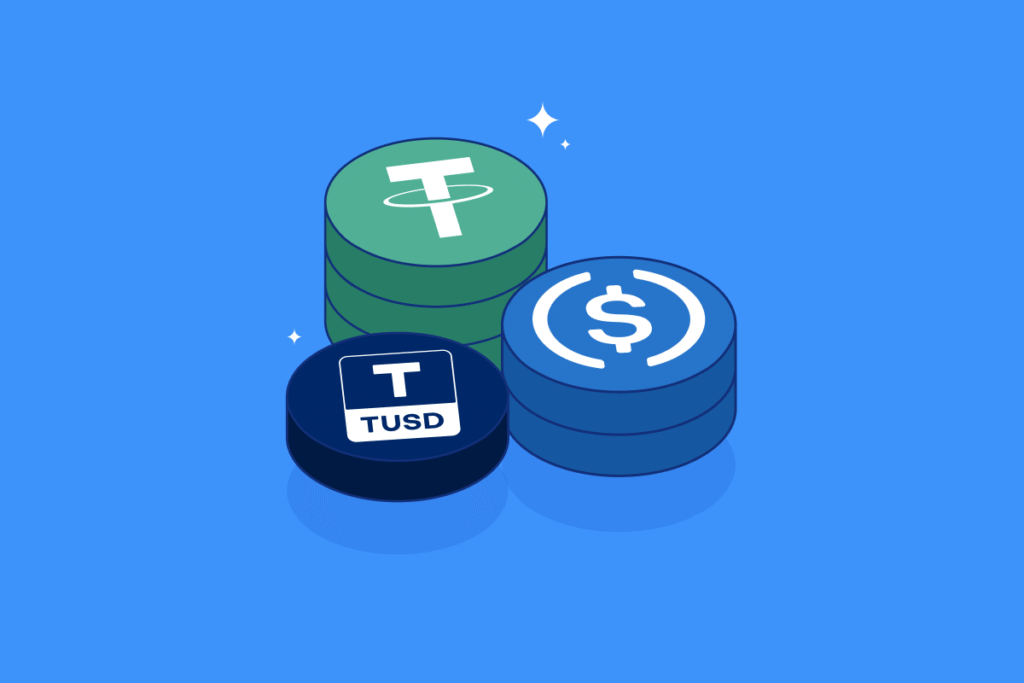
Within DeFi ecosystems, cryptocurrencies such as DAI, USDC, and USDT are the primary means of exchange and are linked to stable assets, usually the US dollar.
5. Insurance Protocols
Decentralized protection against smart contract failures and other DeFi-specific risks is provided by platforms such as Nexus Mutual.
6. Synthetic Assets
Tokenized versions of real-world assets like stocks, commodities, and fiat currencies can be created thanks to protocols like Synthetix.
The Benefits of DeFi: Why It’s Gaining Massive Adoption
Financial Inclusion
Over 1.7 billion adults remain unbanked worldwide. DeFi removes geographical and socioeconomic barriers to financial services.
Higher Yield Opportunities
DeFi lending protocols typically offer significantly higher interest rates (often 2-10% APY) compared to traditional savings accounts.
Full Asset Control
“You own your keys, you own your coins.” With DeFi, you maintain custody of your assets rather than entrusting them to third parties.
Innovation Speed
The open-source nature of DeFi accelerates financial innovation through rapid iteration and protocol composability.
Understanding the Risks: A Balanced Perspective
While DeFi offers tremendous opportunities, it’s crucial to understand the risks:
- Vulnerabilities in smart contracts: Code errors can result in large losses
- Impermanent loss: In erratic markets, liquidity providers may suffer brief losses.
- Regulatory uncertainty: Certain protocols may be impacted by changing regulations
- High volatility: The price of cryptocurrencies can fluctuate dramatically.
- User error: Errors are expensive because transactions cannot be undone.
Always do your own research (DYOR) and never invest more than you can afford to lose.
Getting Started with DeFi: Your First Steps
- Create a wallet: To begin, use a non-custodial wallet such as Trust Wallet or MetaMask.
- Obtain Ethereum: Transaction fees (gas) require Ethereum.
- Begin modestly: Start with established procedures and small amounts of
- Protect your assets: For large holdings, use hardware wallets.
- Stay educated: Follow reputable DeFi resources and communities
The Future of DeFi: What’s Next?
The DeFi space continues to evolve at breakneck speed. Emerging trends include:
- Cross-chain interoperability through bridges and layer-2 solutions
- Integration with traditional finance (TradFi) through regulated products
- Improved user experience, making DeFi more accessible to mainstream users
- Institutional adoption as frameworks mature and risks are mitigated
- Decentralized identity and reputation systems for credit underwriting
Conclusion: Is DeFi the Future of Finance?
One of the most compelling applications of blockchain technology is DeFi, which is a paradigm shift toward a more accessible, transparent, and open global financial system. There is no denying the innovation taking place in the DeFi space, even though it is still in its infancy and faces obstacles.
Your greatest asset is education, just like with any new technology. As this revolutionary ecosystem continues to evolve, begin by grasping the basics, move cautiously, and take part in the discussion.
Disclaimer: This article is for informational purposes only and does not constitute financial advice. Cryptocurrency investments are volatile and high-risk. Always conduct your own research before participating in DeFi protocols.
Ready to explore DeFi? Start by visiting trusted educational resources like DeFi Pulse, CoinGecko’s DeFi section, or the official documentation of major protocols. Remember: in the world of DeFi, your security and due diligence are your own responsibility.